Offline-first by default
The system is built to survive partitions, weak connectivity, and delayed synchronization without requiring an always-on control plane.
Distributed Filesystem Research, Built To Run
NexusFS combines local-first storage, signed operations, deterministic replication, and proof-ready verification in a single executable. It is designed for edge devices, offline-first workflows, and systems that cannot afford blind trust.
Canonical object hashing, chunked CAS writes, persistent heads, and idempotent oplog application are already wired into the workspace.
Why NexusFS
The system is built to survive partitions, weak connectivity, and delayed synchronization without requiring an always-on control plane.
Every mutation is represented as a signed filesystem operation with a stable identifier, allowing idempotent application across peers.
Transparent verification is the immediate baseline, but the object and protocol design reserve a clean path toward ZK commitments.
Background work is intended to respect battery, temperature, and link cost rather than pretending all nodes are always-on servers.
System Shape
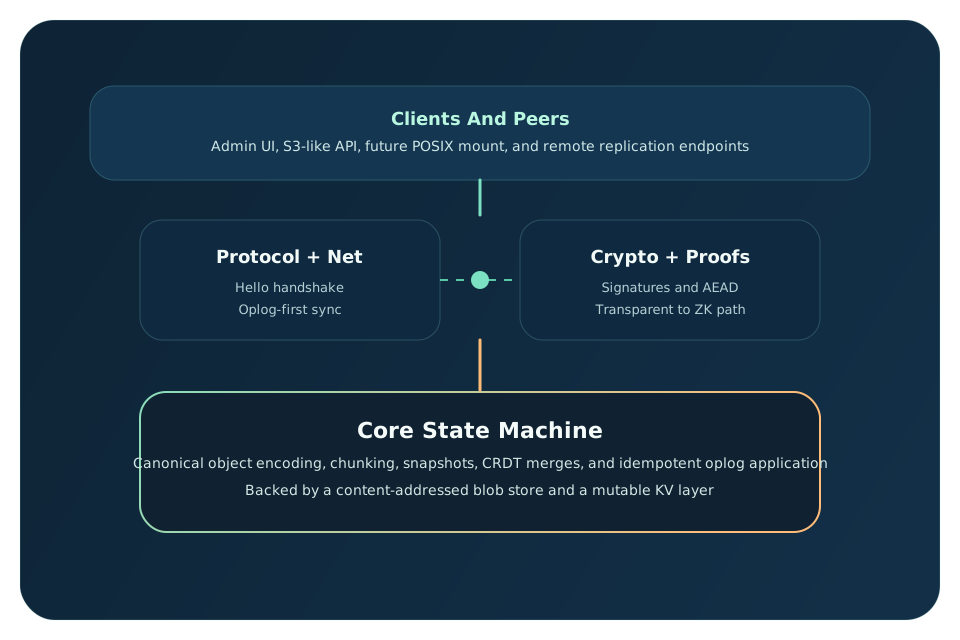
NexusFS separates immutable content, mutable namespace state, transport, and optional facades. That keeps the local state machine deterministic while letting the replication layer and future proof systems evolve independently.
Build Surface
Research Tracks
Quick Start
cargo build -p nexusfs
cargo run -p nexusfs -- daemon --config examples/nexusfs.toml
cargo run -p nexusfs -- status --config examples/nexusfs.toml
The current implementation already boots local storage, persists device identity, creates a repository head on first launch, and serves the admin surface from the embedded HTTP layer.
Documentation
The repo now includes a dedicated `documentation/` folder for clean onboarding and a deeper internal `docs/` set for protocol and research detail.